

In the heart of Zambia’s transformative development agenda lies a story of renewed hope and purpose — a story being written, one classroom at a time, by the Zambia Enhancing Early Learning (ZEEL) Project, and the Zambia Education Enhancement Project (ZEEP).
Anchored in the Government’s commitment to education for all and powered by strategic partnership with the World Bank and the Global Partnership for Education (GPE), the Ministry of Education, through the two projects, is spearheading a wave of education sector reforms across early childhood education, primary, and secondary school levels.
These interventions are more than just projects; they are a national promise — a promise to leave no learner behind, to bridge rural-urban divides in access to education, and to uplift communities through meaningful participation and empowerment.
ZEEL: Building Bright Beginnings for Zambia’s Youngest Learners
The ZEEL Project is perhaps Zambia’s most profound public investment in early childhood education (ECE) to date. Backed by a US$39.01 million grant from the GPE, ZEEL seeks to expand access to equitable and quality ECE for children aged 3 to 6 in 45 of the most disadvantaged districts across all ten provinces.
What sets ZEEL apart is not just the scale of construction — 440 ECE Hub and Satellite Centres — but the deliberate targeting of the poorest and most underserved communities using scientific and poverty-mapping data. These are communities where access to early learning has historically been constrained by distance, poverty, lack of infrastructure and lack of appreciation of this level of foundational learning level by the target communities. Now, they are the focal point of a historic turnaround in education.
Each Hub Centre comprises a 1×2 classroom block (CRB), child-friendly flush toilets, electricity supply, a borehole, and a play park — designed to meet the developmental needs of young learners. The Satellite Centres, though smaller (1×1 CRB), maintain the same holistic learning environment.
The World Bank, as the GPE grant manager, conducts bi-annual implementation support missions, the latest of which was concluded in May 2025.
In her remarks during the meeting to the ZEEL May 2025 World Bank Mission, Ministry of Education Permanent Secretary for Administration, Ms Noriana Muneku, praised the project’s momentum: “I would like to extend my sincere gratitude to the World Bank for the unwavering support you continue to render to the ZEEL Project. Your steadfast commitment, technical guidance, and efficient engagement have played a pivotal role in driving the progress we are witnessing today.” Ms Muneku further hailed the synergy within the ministry’s directorates and project staff as “blistering” — a reflection of ZEEL’s performance on the ground.
ZEEP: Raising the Bar in Secondary Education Access
While ZEEL lays the foundation, the Zambia Education Enhancement Project (ZEEP) seeks to enhance access to secondary education with financing from the World Bank. Launched in 2017 and operational from 2018 to-date, ZEEP’s first phase (2018 – 2021) delivered 82 fully constructed and operational secondary schools across seven of Zambia’s ten provinces. ZEEP’s guiding goal is to improve teaching and learning conditions in primary and secondary schools by constructing safe, inclusive, and well-equipped institutions.
With the advent of the Free Education Policy in 2021, pressure on existing school infrastructure surged, risking overcrowding and diminished quality. In response, the Government secured an additional US$173 million to construct an additional 120 new in all ten provinces.
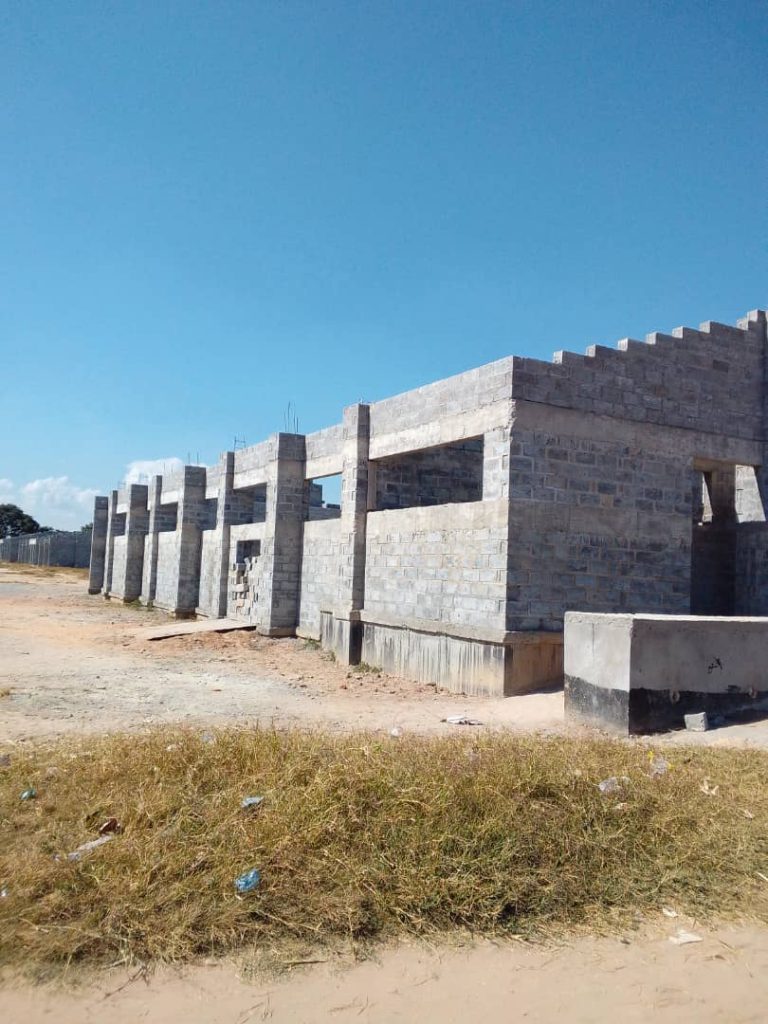
Today, the progress is palpable. On the ground, school blocks are rising — from slabs to roofs — with Copperbelt, Southern, Eastern, Northern, Luapula, and Central Provinces leading the charge. These schools are not just structures; they are gateways to opportunity, particularly for the girl child and other vulnerable learners.
As with ZEEL, the World Bank conductions bi-annual implementation support missions. During the ZEEP mission wrap-up meeting held last month, Ms Muneku informed the World Bank that, “We [the Government] are determined to complete at least 80 of the 120 schools by 31st December 2025, provided there are no major disruptions.” She further emphasized the need for a sustainable solution to addressing cost escalation challenges affecting the remaining 40 ZEEP schools, which are currently experiencing delays in implementation owing to various and varying factors.
Community Economic Empowerment: Beyond education, the community economic empowerment aspect of both ZEEL and ZEEP is the Community-Driven Development (CDD) model of constructing the schools. Local communities are not mere passive beneficiaries but active implementers. Through Project Implementation Committees (PICs) — elected from the local population — communities supervise construction, manage funds, employ and oversee construction workers as opposed to the engagement and deployment of contractors by the projects. Through this model, the Government, Ministry of Education, seeks to not only economically empower communities, but also build more schools to enhance access to education. This is premised on the fact that community mode of construction is cheaper than the contractor mode of construction.
To ensure quality structure that meet engineering guidelines, monitoring is rigorous and multi-layered. From weekly visits by District Buildings Officers (DBO), to monthly inspections by a provincial Resident Engineers (RE), and quarterly reviews by national-level teams, including (ZEPCU) and the Zambia Education Projects Implementation Unit (ZEPIU).
It is a story best told not in numbers alone, but in the smiles of children walking into bright, new classrooms, in the hope of parents watching their daughters go to secondary school, and in the confidence of local leaders entrusted with shaping their own development.
Indeed, ZEEL and ZEEP are not just acronyms — they are accolades to a government and a people committed to building a better Zambia, one learner at a time.