

By Hyde Haguta
A UNESCO study, “Investing in Early Childhood Care and Education Yields Lifelong Benefits,” reveals that 90 percent of a child’s brain development occurs before the age of five. The period between one and three years of age is identified as a critical window for cognitive growth.
Yet, despite the compelling evidence, access to early childhood education (ECE) remains low across many low-income nations—only 35 out of every 100 children are enrolled in ECE programmes, compared to 89 in high-income countries.
In Zambia, access to ECE is estimated at 26 percent according to the 2024 Education Management Information System (EMIS) data.
In response, the Government of the Republic Zambia, through the Ministry of Education, has embarked on an ambitious and transformative journey. Under the Zambia Enhancing Early Learning (ZEEL) project, the country is witnessing unprecedented expansion of ECE infrastructure and facilities in 45 districts spread across all the country’s ten provinces.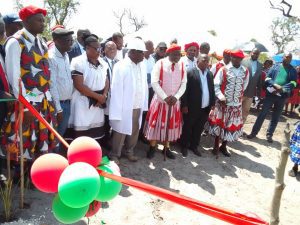
A Bold Infrastructure Drive
While the broader ZEEL programme encompasses teacher support, curriculum enhancement, and community engagement, one of its cornerstone achievements lies in infrastructure development. The Government is currently constructing 260 ECE centres for children aged 3 to 6 years—222 funded by ZEEL through the Global Partnership for Education (GPE), and 38 by the Zambian Government.
According to Ms Noriana Muneku, Permanent Secretary for Administration in the Ministry of Education, this rollout includes 110 hub centres and 112 satellite centres. The 260 centres are part of the planned 540 centres country wide – 100 through the government internally generated resources and 440 through the ZEEL GPE grant financing.
The sites under construction are at varying levels of progress, foundation excavation to roofing, while some have since been roofed, with only final works before they can be commissioned.
Enrolment Surge and Access Gains
Thanks to these investments and the free education policy, ECE enrolment has nearly doubled—from 336,000 learners in 2021 to over 651,000 in 2024. This expansion not only reflects increased access but also rising demand for early learning among families nationwide.
“Out of Zambia’s 11,464 Government Primary Schools, 6,590 have now established ECE centres,” Ms Muneku noted.
Dr Joachim Nyoni, a Developmental Psychologist who is also ZEEL Component 3 Coordinator, explains that quality ECE lays the foundation for success.
“Children who attend quality early learning programmes are more likely to enter Grade 1 with the language, cognitive, and social skills needed to thrive”, he said. This was during the Trainer of Trainer workshop on Parent Centre Committees (PCCs) workshop for Provincial Education Standard Officers (PESOs) and other key ministry of education staff in Kapiri Mposhi
Dr Nyoni further urges parents to view early childhood education not as an option, but as a cornerstone investment in the nation’s future.
Building for Quality and Inclusion
Making her presentation during the same workshop, Ms Patrine Chilala, Assistant Director for ECE at the Ministry, stressed the importance of infrastructure development in ECE.
“Teachers must take keen interest in the infrastructure progress. These facilities are vital for delivering meaningful and engaging learning experiences,” she emphasised.
In addition, ZEEL Deputy Project Coordinator Ms Evelyn M. Simfukwe called for heightened community involvement through PCCs—local governance bodies composed of parents or guardians, tasked with supporting centres in areas such as nutrition, safety, psychosocial support, and recreational development.
The ZEEL Architecture: Five Pillars for Impact
The ZEEL Project is structured around five key components, each aimed at holistically enhancing early childhood education:
Component 1 – Infrastructure Development: Oversees construction of 440 centres, including hub centres (1×2 classroom blocks) and satellite centres (1×1 blocks), complete with health bays, kitchens, storerooms, administration offices, child-friendly toilets, electricity (solar or grid), and fenced play areas.
Component 2 – Learning Quality: Focuses on developing and implementing National Quality Standards (NQS), Quality Early Learning Environment and Resource tools (QELER), and Formative Assessment Tools (FAT) to assess literacy, pre-math, and creativity, and guide individualised learning plans (ILPs).
Component 3 – Learning Delivery: Strengthens classroom instruction through teacher training, caregiver engagement, and PCC capacity-building.
Component 4 – System Strengthening: Enhances monitoring and evaluation, communication, procurement, and grievance redress mechanisms. It has established Project Steering Committee to provide policy direction to ZEEL as well as Implementation Committees (PICs) at national and school levels to ensure cross-sector coordination.
Component 5 – Emergency Preparedness: Ensures resilience in the face of disruptions or crises.
A ZEPCU media consumption survey and communication strategy have already been rolled out to enhance visibility and community engagement in target districts.
According to the ZEEL 2024 Operational Project Implementation Manual (PIM), a Community-Driven Development (CDD) model is being employed in the construction of early childhood education (ECE) hubs and satellite centres. This model blends two complementary approaches: a Community-Based Approach for construction activities and a Centrally Based Approach for the procurement of goods, works, and services, including age-appropriate furniture and toilets for the centres being constructed under the auspices of ZEEL.
Under the Community-Based Approach, the Ministry of Education delegates specific construction management responsibilities to local communities. To operationalise this inclusive strategy, Project Implementation Committees (PICs) are established at primary school level—where the hubs and satellite centres are situated. These PICs function as grassroots governance structures responsible for overseeing day-to-day construction and administrative tasks at the local level.
With these structures in place, the Ministry of Education, through the ZEEL project, effectively transfers decision-making responsibilities to the school communities, allowing for greater participation and local ownership, while maintaining ultimate accountability to the Ministry, as outlined in the PIM.
However, this delegation is not absolute. The Ministry, through ZEEL, retains key control functions, including resource allocation, procurement, evaluation, and contract awarding, which remain under the authority of the Central Ministry Procurement Committee.
The role of the local community includes contributing local materials and labour—such as providing land, collecting and loading river sand, building sand, gravel, or hardcore. Community representatives are also actively engaged in the implementation and monitoring of the ECE infrastructure development process.
Shaping Tomorrow, Today
With over 45 percent of Zambia’s population below the age of 15, early childhood education is more than a developmental priority—it is a strategic imperative.
“Early childhood learning is not babysitting; it is nation-building. We are not just teaching ABCs—we are shaping Zambia’s future,” Dr Nyoni passionately stated.
From the construction of classrooms to the transformation of mindsets, every ECE centre rising across the country is a testament to a brighter, smarter Zambia—built one child at a time.
As Zambia advances towards Sustainable Development Goal 4.2—universal access to quality early learning—the ZEEL project stands as a model for inclusive and scalable educational reform.
